

Introduction
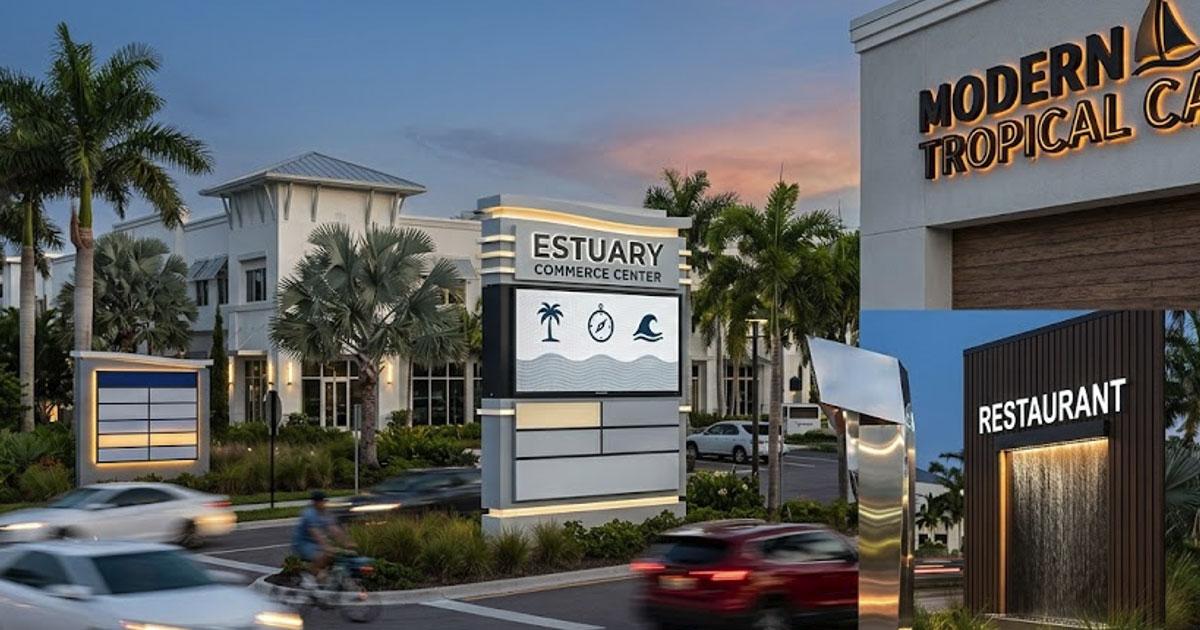
Not all signs compete on size or location. Some of the most effective signage in Southwest Florida wins attention because of something more subtle — movement.
At SWFL Signs, we understand that the human eye is naturally drawn to motion, shifting light, and visual contrast. Even when a customer isn’t actively searching for a business, their attention can still be guided — if the signage is designed correctly.
Why the Eye Always Notices Movement First
Human vision is wired for survival, which means the brain prioritizes anything that changes or moves within a visual field.
In signage, “movement” doesn’t always mean physical motion. It can also include:
- LED lighting transitions
- Changing brightness or illumination
- Reflections from sunlight or street lighting
- Shifting perspective as a vehicle moves past
Even subtle visual changes can trigger attention before a message is consciously processed.
The Power of Light in Sign Visibility
Lighting is one of the most important tools in modern signage because it creates contrast that remains visible at all times of day.
Well-designed illuminated signage can:
- Maintain visibility during nighttime hours
- Stand out against busy visual backgrounds
- Increase readability in rain or low-light conditions
- Extend brand exposure beyond business hours
In a high-traffic region like Southwest Florida, lighting often determines whether a sign is seen consistently or only part of the time.
How Driving Speed Changes Sign Perception
One of the biggest challenges for signage in Southwest Florida is vehicle speed and traffic flow.
When drivers pass a sign, they typically have only a few seconds to:
- Notice it
- Read it
- Understand it
- Remember it
This means signage must communicate instantly. Designs that are too complex or cluttered lose effectiveness because the brain cannot process them quickly enough.
Contrast Is What Makes Motion Effective
Movement alone is not enough. For signage to truly stand out, contrast must guide the eye.
Strong contrast helps:
- Separate text from background instantly
- Improve readability at a glance
- Enhance visibility from a distance
- Prevent visual blending with surroundings
Without contrast, even illuminated or dynamic signage can disappear into the environment.
Environmental Motion: Southwest Florida’s Unique Advantage and Challenge
Southwest Florida introduces natural “motion” factors that affect signage visibility:
- Constant sunlight shifts throughout the day
- Storm clouds and weather changes
- Reflections from water and coastal surfaces
- High vegetation growth that can partially obstruct views
These environmental factors mean signage must be designed to remain effective under constantly changing conditions.
Why Simplicity Wins in Fast-Moving Environments
When attention is limited, simplicity becomes power.
Effective signage in motion-heavy environments focuses on:
- Short, direct messaging
- Clean typography
- Minimal visual clutter
- Strong brand recognition elements
The faster a message can be understood, the more effective it becomes in real-world conditions.
The Connection Between Memory and Visibility
Attention is only the first step — memory is what drives action later.
Signs that successfully combine motion, contrast, and clarity are more likely to:
- Stick in a customer’s memory after they pass
- Be recognized later when the need arises
- Build familiarity through repeated exposure
- Reinforce brand identity over time
This is where effective signage becomes long-term marketing, not just visual decoration.
Closing Thoughts
Great signage doesn’t just sit still and wait to be noticed. It interacts with its environment — through light, contrast, placement, and perceived motion — to capture attention in a split second.
At SWFL Signs, we design with that reality in mind. Because in Southwest Florida, visibility isn’t just about being seen — it’s about being noticed at the exact moment it matters most.
